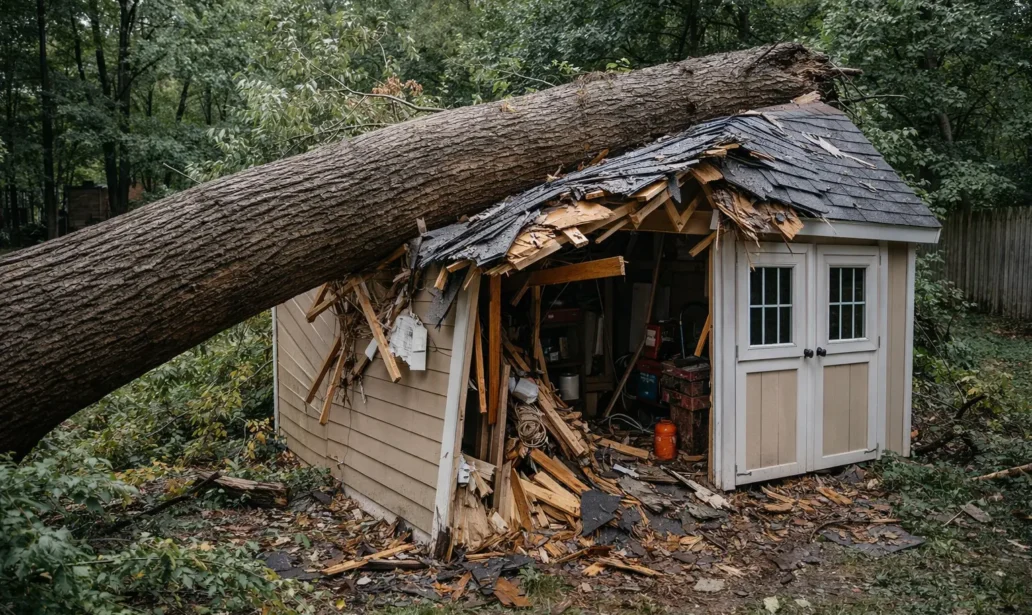
Sheds sit in the parts of the yard where the big trees tend to be. Back corners, fence lines, spots that don’t get much foot traffic. Which is part of why they take hits from falling trees more often than you’d expect. The storm moves through, the tree comes down, and you might not even know until you walk outside the next morning.
Look Before You Open Anything
Before you go near the shed door, look at it from a distance. If the roof is visibly collapsed, if a large section of tree is sitting on it, or if the walls look like they’ve shifted at all, keep your distance. A damaged roof under that kind of weight can come down without much notice.
If the shed is close to the house or near any utility lines, check those areas first too.
If It Looks Stable Enough to Approach, Be Careful
Look through a window or the crack around the door before you open it. Collapsed roof sections can pile up against doors and fly when you pull them open. If the interior looks okay, go in slowly and watch what’s above you. Sections of tree or roof that are resting at awkward angles are still unstable.
If the shed stores gas cans, paint, or other chemicals, air it out before spending any real time inside.
Document Everything Before Any Cleanup Starts
Photos and video of the tree position, the roof and wall damage, and the interior. Tools, equipment, or anything stored inside that was damaged should be documented separately. Any coverage for shed damage depends on your specific policy and insurer approval. Get your insurance company on the phone before you authorize any removal or repairs.
Leave the Tree for the Professionals
A tree sitting on a shed is under tension in ways that aren’t always obvious from the outside. Cutting the wrong section first can cause what’s left to drop harder onto what’s left of the shed roof. Even a smaller tree deserves a plan before anyone starts cutting.
For larger situations, the approach is exactly like any structural removal: sectional cutting with attention to how the structure responds as weight comes off. See the full breakdown of how this works on the page for tree on shed removal. tree removal specialists in Maryland at Tree On Me handle this type of job throughout Montgomery County.
After It’s Out: Is the Shed Worth Fixing?
Get an honest answer on this before you commit to anything. For an older shed with serious damage, repair estimates can come in close to or over what it would cost to replace it. Have a contractor look at the actual structure and give you a real assessment.
If it is worth repairing, get a tarp over any roof opening immediately to limit water damage while repairs get organized. Water gets in fast and makes everything worse.
Look at What Actually Caused This
If the tree was on your property, spend a few minutes asking yourself whether there were signs beforehand. A lean you’d kind of noticed. Bark that looked off. Dead sections in the canopy. Other trees nearby that are in similar shape deserve a look while you’re already dealing with this one.
One tree falling on a shed is frustrating. Two trees doing it because you didn’t look after the first one is a different level of frustrating.
It Gets Resolved
A shed with a tree on it is a legitimate mess to deal with. But it’s a solvable one. With the right removal crew and a contractor for the structure itself, most homeowners get back to normal use in a reasonable amount of time. Start with safety, document everything, and let the professionals handle the tree.